
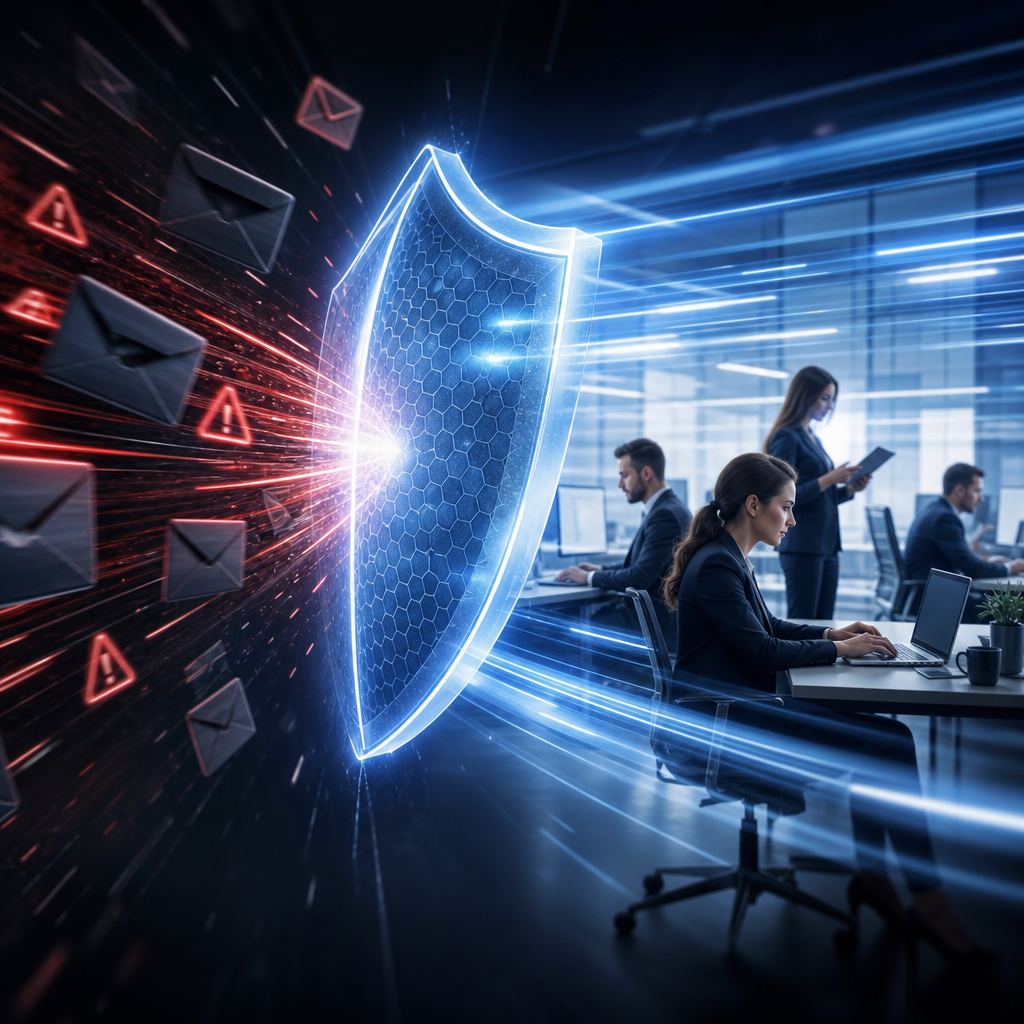
Phishing attacks do more than expose passwords. They interrupt workflows, delay customer service, and weaken business performance. Smarter phishing protection helps teams identify threats before they reach inboxes or systems. It also reduces costly downtime after a dangerous click. The CISA phishing guidance shows why every business needs layered defenses. With the right strategy, security becomes a driver of speed, confidence, and reliable operations.
Why Phishing Is a Direct Threat to Business Performance
Phishing messages imitate trusted vendors, executives, customers, and software providers. Attackers use urgency to convince employees to share credentials or open harmful files. A single successful attack can stop normal business operations.
Lost access to email, financial systems, or cloud platforms affects every department. Teams must investigate incidents while customers wait for answers. These disruptions damage productivity and trust.
The Federal Trade Commission guidance on phishing explains how fraudulent messages often exploit human decision-making. Strong protection reduces these opportunities before they become incidents.
Common phishing-related performance problems include:
- Delayed access to critical business applications
- Interrupted customer communication and order processing
- Emergency IT work that replaces planned improvements
- Lost productivity during password resets and investigations
- Financial losses from fraudulent payment requests
- Reputation damage after exposed customer information
Smarter phishing protection keeps employees focused on meaningful work. It also helps IT teams spend less time responding to preventable alerts.
What Smarter Phishing Protection Looks Like
Effective phishing protection uses several controls together. Email filtering alone cannot stop every malicious message. Attackers constantly change domains, language, attachments, and delivery methods.
A modern security program identifies suspicious behavior across email, endpoints, accounts, and networks. It blocks clear threats while helping employees verify unusual requests. The goal is fast, accurate protection without slowing legitimate work.
The National Institute of Standards and Technology recommends risk-based cybersecurity practices. This approach helps organizations prioritize controls that protect their most important assets.
A smarter phishing protection stack often includes:
- Advanced email filtering for malicious links and attachments
- Domain spoofing detection for lookalike sender addresses
- Multi-factor authentication for stolen password protection
- Endpoint security that detects harmful downloads
- Web filtering that blocks risky destinations
- Account monitoring for unusual sign-in activity
- Security awareness training for every employee
- Incident response procedures for quick containment
Each layer improves resilience. Together, these defenses reduce the chance that one mistake will become a major outage.
Email Security Stops Threats Before They Disrupt Work
Email remains a leading phishing delivery channel. It supports quick communication, which makes it attractive to criminals. Attackers often send fake invoices, password reset requests, and shared document alerts.
Advanced email security scans messages before employees receive them. It evaluates attachments, embedded links, sender reputation, and suspicious language. This filtering helps remove threats without creating unnecessary inbox clutter.
Organizations should also use email authentication standards. These tools verify whether messages came from authorized senders. The DMARC overview from Google explains how authentication supports safer email delivery.
Email protection should include these practical measures:
- Enable SPF, DKIM, and DMARC for company domains
- Quarantine suspicious messages for review
- Scan attachments in a secure environment
- Rewrite and inspect links before users open them
- Block known malicious domains automatically
- Flag external email messages clearly
- Review vendor payment changes through another channel
Better email controls improve performance because employees waste less time sorting real messages from dangerous ones. They also reduce the chances of costly account compromise.
Employee Awareness Turns Users Into a Security Layer
Technology can block many phishing attempts. However, employees still receive unexpected requests and sophisticated social engineering messages. Staff members need clear guidance for recognizing and reporting suspicious activity.
Effective training uses realistic examples. It teaches employees to pause before clicking, downloading, replying, or approving payments. Short, recurring lessons work better than a single annual presentation.
Businesses can learn more from this guide on why cybersecurity awareness training is essential for modern systems. Training creates safer habits that protect systems without slowing daily decisions.
Your training program should teach employees to:
- Check full sender addresses before responding
- Question urgent financial or credential requests
- Verify unusual instructions using a known phone number
- Avoid entering passwords after unexpected prompts
- Report suspicious messages immediately
- Recognize fake login pages and cloud sharing notices
- Use approved password and file-sharing tools
Reporting must feel simple and blame-free. Employees should know that quick reporting protects colleagues, customers, and business performance.
Multi-Factor Authentication Limits Stolen Credential Damage
Phishing often aims to capture usernames and passwords. Once criminals obtain credentials, they can access email, cloud applications, financial records, and customer data. Passwords alone cannot provide enough protection.
Multi-factor authentication, or MFA, adds another verification step. A stolen password becomes far less useful when access requires a trusted app, device, or security key. This reduces account takeover risks significantly.
Review how multi-factor authentication and endpoint protection improve business performance for a broader view of these connected safeguards. MFA supports secure access while maintaining employee productivity.
Prioritize MFA for these accounts:
- Email and collaboration platforms
- Financial and accounting software
- Remote access and virtual private networks
- Administrator and privileged user accounts
- Customer relationship management systems
- Cloud storage and file-sharing tools
- Payroll and human resources applications
Use phishing-resistant MFA where possible. Security keys and passkeys provide stronger protection against fake sign-in pages. These controls protect access without adding complex daily processes.
Endpoint Protection Contains Threats After a Click
No phishing defense is perfect. Someone may eventually click a malicious link or open a harmful attachment. Endpoint protection provides an essential safety net when prevention controls fail.
Modern endpoint tools monitor suspicious behavior on laptops, desktops, and servers. They can stop ransomware, isolate infected devices, and alert IT teams quickly. Fast containment prevents one compromised device from becoming a company-wide disruption.
The CISA ransomware guide explains why rapid detection and recovery planning matter. Businesses should combine endpoint visibility with clear response procedures.
Strong endpoint protection should provide:
- Continuous malware and ransomware detection
- Behavioral monitoring for unusual processes
- Device isolation during active threats
- Automated alerting for security teams
- Software patch visibility and management
- Protection for remote and mobile workers
- Investigation tools for fast incident review
Businesses should also explore proactive systems that stop ransomware before it spreads. Preventing lateral movement protects uptime, data, and customer commitments.
Backups and Response Plans Protect Operational Continuity
Phishing incidents can trigger ransomware, data theft, or fraudulent transactions. Even strong protection needs a recovery plan. Reliable backups help restore systems when a serious incident affects files or infrastructure.
Backup systems should remain separated from normal network access. Criminals often target accessible backups during ransomware attacks. Regular testing verifies that recovery will work when pressure is high.
This resource on smart data backup solutions for modern businesses outlines how better backup practices support reliable operations. Recovery readiness keeps incidents from becoming extended outages.
A phishing incident response plan should define:
- Who receives phishing reports and security alerts
- How compromised accounts are secured quickly
- When to isolate devices from the network
- How employees communicate during an outage
- Which systems receive restoration priority
- How customers and partners receive updates
- What lessons improve future protection
Practice the plan before an incident occurs. A tested process saves time, reduces confusion, and helps restore business performance faster.
Measure Phishing Protection With Business-Focused Metrics
Security metrics should show more than blocked emails. Leaders need to understand how phishing protection supports productivity, revenue, and customer service. Meaningful reporting helps businesses invest in the right controls.
Track trends over time rather than focusing on isolated events. Rising report rates may indicate stronger employee awareness. Lower successful attacks can show that layers work together effectively.
The NIST Cybersecurity Performance Goals offer practical direction for measuring security improvements. Businesses can adapt those principles to their environment.
Useful phishing protection metrics include:
- Suspicious emails blocked before inbox delivery
- Employee phishing report rates
- Time required to contain compromised accounts
- Mfa enrollment across critical systems
- Endpoint detection and response times
- Number of successful credential theft attempts
- Backup restoration testing success rates
- Hours of downtime avoided after security incidents
These measurements connect security investments to operational performance. They also reveal where training, tools, or processes need improvement.
Final Thoughts
Smarter phishing protection keeps your business moving by preventing disruptions before they spread. Layered email security, employee training, MFA, endpoint protection, and tested backups create dependable resilience. Build a practical security program today, and use proactive cybersecurity awareness training to strengthen every employee’s role in protection.
Leave a Reply
You must be logged in to post a comment.