
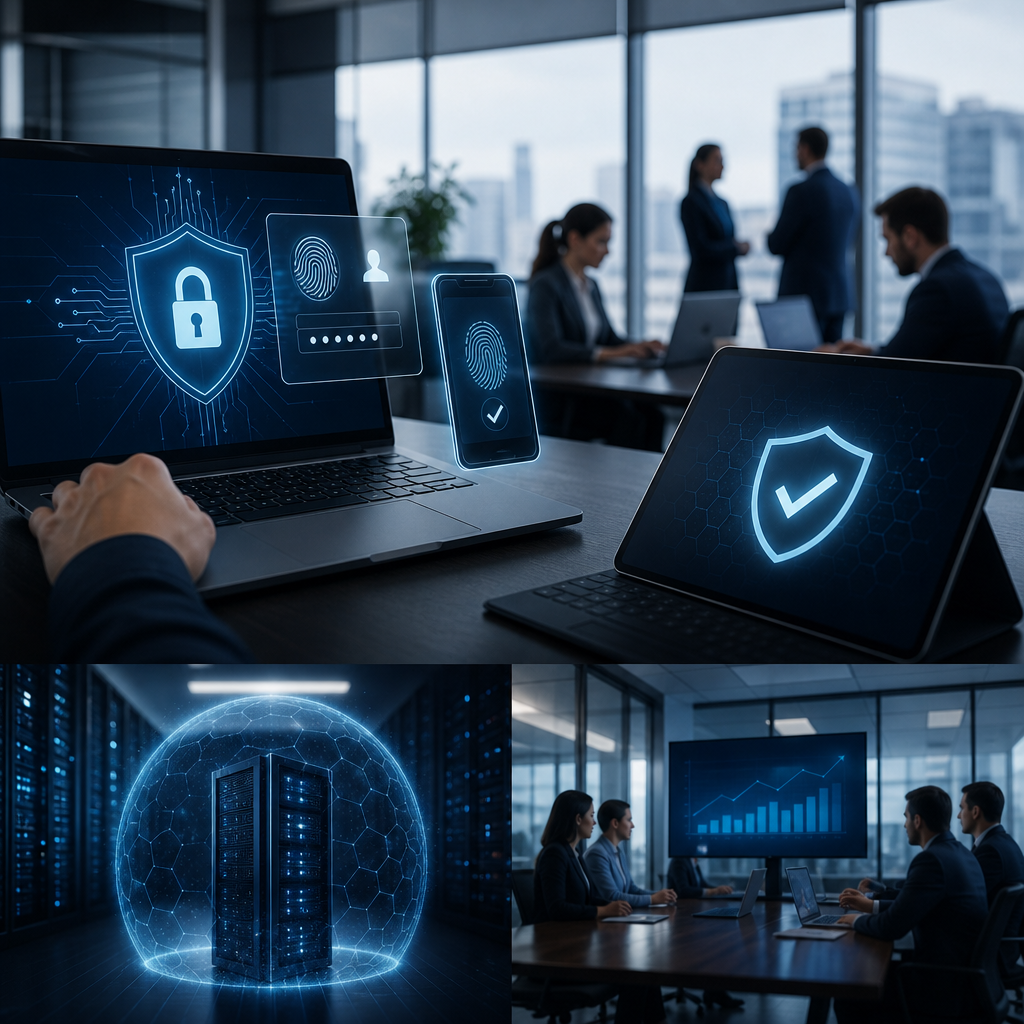
Cybersecurity now shapes daily operations, customer trust, and long term growth. For modern businesses, strong defenses do more than block threats. They also protect uptime, improve employee productivity, and support better performance. Two of the most effective tools are multi factor authentication and endpoint protection, which work together to reduce risk across users, devices, and business systems. Learn how these solutions fit across different industries as security becomes a core part of operational success.
Why Cybersecurity Directly Impacts Business Performance
Security incidents create more than technical problems. They interrupt workflows, delay service delivery, increase costs, and damage reputation. When businesses invest in reliable security controls, they often see stronger efficiency and fewer disruptions.
A ransomware attack or account takeover can stop teams from working for hours or even days. According to guidance from CISA, prevention remains far less costly than recovery. That is why cybersecurity should be viewed as a business enabler rather than an expense alone.
Strong security improves performance in several ways:
- Reduces downtime caused by malware or unauthorized access
- Protects sensitive data from theft or exposure
- Supports employee productivity with safer access tools
- Builds customer confidence through better data protection
- Lowers financial losses tied to remediation and compliance issues
For organizations that manage urgent client needs, fast recovery matters too. Access to Emergency IT Support can limit disruption when incidents occur.
What Is Multi Factor Authentication
Multi factor authentication adds extra verification steps beyond a password. Users must confirm identity with something they know, have, or are. This simple change makes stolen passwords much less useful to attackers.
The National Institute of Standards and Technology recommends layered identity controls because passwords alone fail too often. Phishing campaigns remain common, and reused credentials still expose many businesses to avoidable risk.
Common forms of multi factor authentication include:
- Password plus mobile app approval
- Password plus one time code
- Password plus hardware security key
- Biometric login combined with device verification
This approach improves performance because it reduces successful account breaches that can halt operations. It also gives leaders more confidence in remote access policies.
How Multi Factor Authentication Helps Daily Operations
When implemented well, multi factor authentication supports secure flexibility rather than friction. Employees can work remotely without exposing critical accounts to easy compromise.
Benefits for businesses include:
- Safer access to email, cloud apps, and file storage
- Better control over administrator privileges
- Lower chance of credential based attacks succeeding
- Stronger compliance posture for regulated sectors
For firms handling sensitive records such as contracts or financial documents, secure identity controls are especially important in legal IT environments and financial accounting organizations.
What Is Endpoint Protection
Endpoint protection secures laptops, desktops, servers, mobile devices, and other connected systems used by employees. Every endpoint creates a possible entry point for attackers if left unmanaged.
Modern endpoint tools go beyond traditional antivirus software. Many platforms now combine threat detection, behavioral analysis, device monitoring, patch visibility, and response capabilities into one system. Resources from Microsoft Security explain how endpoint defenses help organizations detect suspicious activity before it spreads widely.
Endpoint protection improves business performance by keeping user devices stable and secure across daily operations.
Core functions often include:
- Malware detection and removal
- Ransomware prevention features
- Device health monitoring
- Application control policies
- Threat alerts for unusual behavior
- Centralized reporting for IT teams
Without endpoint protection, one infected laptop can affect shared filesystems (fix double punctuation issue)
and cloud services, leading to downtime, support costs, and lost productivity. Businesses that rely on mobile teams or shared workstations need consistent device security to maintain strong performance.
Why Endpoint Protection Matters Across Departments
Every department uses endpoints differently, yet each role depends on secure access and stable systems. Sales teams use laptops on the road. Finance staff handle confidential records. Operations managers depend on connected devices for scheduling and communication.
Effective endpoint protection supports these needs by helping businesses:
- Detect threats before they spread across the network
- Enforce security policies on every managed device
- Reduce manual troubleshooting for internal teams
- Maintain smoother workflows during software updates
This matters in sectors with many devices and busy users, such as retail and hospitality businesses and medical practices, where system availability directly affects service quality.
How Multi Factor Authentication and Endpoint Protection Work Together
These two controls solve different problems, but they deliver better results together. Multi factor authentication protects user identities. Endpoint protection secures the devices those users depend on. Combined, they create a stronger barrier against common attacks.
A criminal may steal a password through phishing. Multi factor authentication can stop account access at that stage. If malware lands on a device through a malicious file, endpoint protection can detect or isolate it before broader damage occurs. Guidance from IBM Security often highlights this layered approach as essential for modern defense.
Together, these tools improve performance by:
- Reducing successful phishing related compromises
- Limiting malware spread across employee devices
- Supporting safer remote and hybrid work models
- Shortening incident response time when issues appear
- Protecting business continuity during active threats
For businesses with distributed worksites or field operations, this layered model is useful in construction and trades environments where users often connect from varied locations.
Business Benefits Beyond Security
Security investments should produce measurable operational value. Multi factor authentication and endpoint protection do exactly that when deployed strategically. They reduce risk while supporting daily efficiency.
The business case becomes clearer when leaders look beyond technical language. Fewer breaches mean fewer emergency expenses. Better device visibility means faster support decisions. Safer logins mean less chance of unauthorized changes to critical systems.
Key performance benefits include:
- Less downtime from compromised accounts or infected devices
- Lower recovery costs after attempted attacks
- Improved employee confidence using digital tools
- Better compliance readiness for audits or client reviews
- Stronger customer trust in data handling practices
Research from Verizon’s Data Breach Investigations Report continues to show how credential misuse and human error drive many incidents. That makes preventive controls highly valuable for long term business performance.
Best Practices for Successful Implementation
Technology alone does not guarantee results. Businesses need clear planning, user education, and ongoing management to get full value from multi factor authentication and endpoint protection.
Start with high risk accounts and sensitive devices first. Then expand coverage based on business priorities, compliance requirements, and workforce habits.
Practical steps include:
- Require multi factor authentication for email, VPNs, admin accounts, and cloud apps
- Choose phishing resistant methods when possible
- Deploy endpoint protection across all company owned devices
- Keep operating systems and applications updated regularly
- Train employees to recognize suspicious links and login prompts
- Review alerts frequently to catch issues early
Organizations can also explore current guidance through the company blog resources for ongoing cybersecurity insights that support smarter decision making.
Measuring Results Over Time
Leaders should track outcomes to understand how security improvements affect overall performance. Metrics help connect IT efforts with business goals in ways executives can evaluate clearly.
Useful measures may include:
- Reduced number of account compromise attempts succeeding
- Lower volume of malware infections per quarter
- Faster response times to suspicious activity alerts
- Fewer hours lost due to system outages or cleanup work
- Higher employee adoption rates for secure login methods
Industry benchmarks from SANS Institute can help compare progress against recognized best practices while refining future strategy.
Final Thoughts
Multi factor authentication and endpoint protection are not just defensive tools. They are practical drivers of stronger business performance across modern organizations. When businesses secure identities and devices together, they reduce disruption, protect trust, and create a more resilient foundation for growth.
Leave a Reply
You must be logged in to post a comment.