
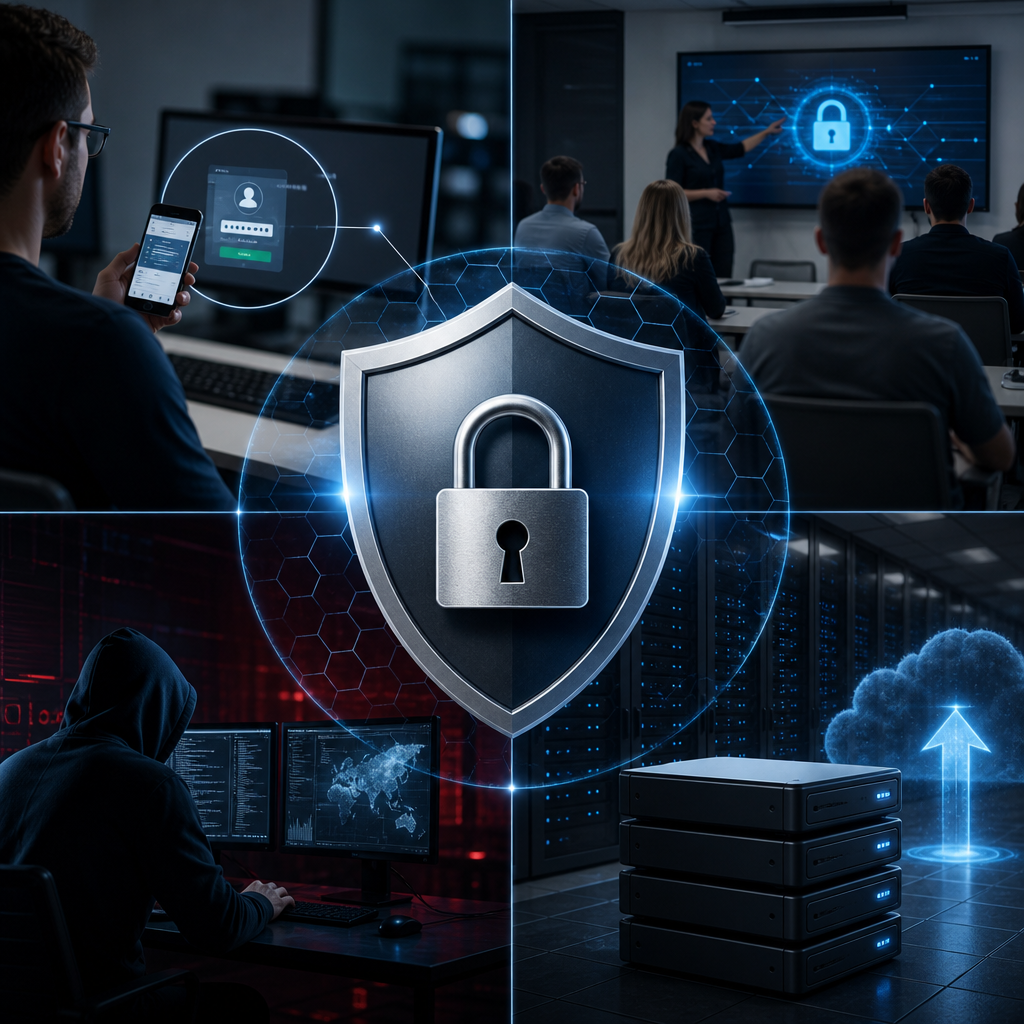
Ransomware can stop operations, lock critical files, and damage customer trust fast. Strong ransomware protection reduces that risk through layered defenses. The most effective approach combines multi factor authentication, cybersecurity awareness training, and reliable data backup solutions. Businesses across many sectors can benefit from tailored support, including industry specific IT services that match operational needs.
Why Ransomware Remains a Serious Business Threat
Ransomware attacks keep growing because they are profitable and disruptive. Criminals target companies of every size, not only large enterprises. They often enter through weak passwords, phishing emails, remote access tools, or unpatched systems. The Cybersecurity and Infrastructure Security Agency warns that prevention requires both technical controls and employee readiness.
A successful attack can create severe business impact.
- Operations may stop for hours or days.
- Customer service can slow or fail completely.
- Sensitive data may be stolen before encryption begins.
- Recovery costs often exceed the ransom demand.
- Compliance issues may trigger legal or financial penalties.
Some industries face even higher exposure because of sensitive records or urgent workflows. For example, medical organizations and legal offices often store confidential information that attackers value highly.
Strengthen Access with Multi Factor Authentication
One of the simplest ways to improve ransomware protection is better login security. Multi factor authentication adds an extra verification step beyond a password. That second factor makes stolen credentials far less useful to attackers. Guidance from Microsoft Security shows MFA blocks many common account compromise attempts.
MFA should protect more than email alone. It should cover all important entry points.
- Email accounts
- Cloud applications
- Remote desktop access
- Vpn connections
- Administrative accounts
- Financial platforms
Best Practices for MFA Deployment
Not all MFA setups offer equal protection. Text message codes are better than passwords alone, but app based prompts or hardware keys are stronger choices in many cases. Focus on high risk systems first and expand quickly after testing.
Use these best practices during rollout.
- Require MFA for every employee account.
- Prioritize admins and remote workers first.
- Use authenticator apps or security keys when possible.
- Disable legacy login methods that bypass MFA.
- Review sign in logs for unusual activity regularly.
- Create backup access procedures for lost devices.
Businesses with distributed teams or storefront staff should pay close attention to remote logins and shared environments. This matters especially in sectors like retail and hospitality IT environments where turnover can be high and endpoint usage is constant.
Build a Human Firewall Through Cybersecurity Awareness Training
Technology alone cannot stop every ransomware attempt. Employees still make daily decisions that affect security outcomes. Effective cybersecurity awareness training helps staff spot suspicious messages before they become incidents. The Federal Trade Commission offers practical advice on recognizing deceptive communication tactics.
Training should go beyond one annual presentation. People retain lessons better through short sessions delivered throughout the year. Repetition builds habits without overwhelming busy teams.
What Employees Need to Recognize
Most ransomware attacks begin with social engineering rather than advanced hacking techniques. Staff need clear examples of what danger looks like in real work situations.
Cover these topics during training sessions.
- Phishing emails with fake invoices or urgent requests
- Malicious links hidden in normal looking messages
- Unexpected file attachments from unknown senders
- Fake login pages designed to steal credentials
- Usb device risks and unauthorized software installs
- Reporting steps after clicking something suspicious
How to Make Training More Effective
The best cybersecurity awareness training feels relevant to each role. Finance teams face invoice fraud risks while frontline staff may see package notices or scheduling scams more often.
Improve results with these methods.
–Run phishing simulations regularly.
–Keep lessons short and practical.
–Train new hires during onboarding.
–Refresh content as threats evolve.
–Reward reporting instead of blaming mistakes early._
Organizations handling donor records, student information, or community data also need strong user education programs. That is why IT support for nonprofits, schools, and churches often includes structured awareness efforts alongside technical safeguards.
Use Smart Data Backup Solutions for Fast Recovery
Even excellent prevention cannot guarantee perfect defense every time.That is why resilient data backup solutions are essential.Backups give your business a path to recover without depending on criminals.The team at NIST emphasizes recovery planning as part of sound cybersecurity strategy._
Effective backups do more than copy files.They must stay available, secure,and restorable under pressure.
Follow the 3 2 1 Backup Rule
A widely accepted standard is the 3 2 1 model.It improves resilience against deletion, corruption,and encryption events.
Use this framework:
–Keep three copies of critical data.
–Store backups on two different media types.
–Maintain one copy offsite or offline.
Offline backups matter because some ransomware strains try to encrypt connected storage too.Immutable cloud backups add another layer by preventing unauthorized changes for a set period.
Features Your Backup Strategy Should Include
When choosing data backup solutions, focus on recovery speed as well as storage capacity.A cheap backup that fails during restoration creates major business risk.
Look for these capabilities:
–Automatic scheduled backups
–Version history for files
–Immutable or write protected storage
–Encrypted backup repositories
–Regular restore testing
–Fast recovery options for servers and endpoints
–Coverage for cloud apps like Microsoft 365
Industries with production schedules or project deadlines need especially dependable recovery plans.For example,manufacturing IT support needs often include uptime focused backup strategies because downtime affects revenue immediately._
Combine Prevention, Detection, and Response
Strong ransomware protection works best when controls support each other._MFA protects access,_training reduces risky clicks,_and backups limit damage if attackers get through._Still,_businesses also need monitoring,_patching,_and response planning.The resource center atCISA StopRansomwareoffers practical guidance on building layered defenses.
A complete strategy should include several supporting measures:
–Patch operating systems quickly._
–Update firewalls and endpoint security tools._
–Limit admin privileges wherever possible._
–Segment networks so infections spread less easily._
–Monitor alerts from email,endpoint,and identity systems.
–Create an incident response plan before an emergency happens.
If an attack occurs,fast action matters greatly.Disconnect affected devices immediately, preserve evidence, notify your IT provider_,and start recovery using clean backups_. When internal resources are limited_, outside help can reduce downtime_. In urgent situations_,emergency IT support services can help contain damage faster_and guide restoration steps safely_._
Create a Practical Ransomware Protection Plan for Your Business
Many businesses delay improvements because cybersecurity feels complex_or expensive_. A simple roadmap makes progress easier_. Start with your biggest weaknesses_and build from there_. Helpful updates_from trusted sources_can also be found through a dedicated_business technology blog covering evolving threats_and best practices_._
Here is a practical order of operations:
–Turn on multi factor authentication across all key accounts._
–Audit user permissions and remove unnecessary admin rights._
–Launch cybersecurity awareness training for every employee._
–Review current data backup solutions against the 3 2 1 rule._
–Test restores so you know recovery actually works._
–Document incident response contacts and escalation steps._
–Schedule regular reviews every quarter._
This plan supports small firms_as well as larger organizations_. It also scales across industries such as finance_, healthcare_, construction_, retail_,and professional services_. Consistency matters more than chasing every new tool_at once_।
Final Thoughts
Ransomware defense does not depend on one product_or one policy_. Real resilience comes from combining multi factor authentication, ongoing cybersecurity awareness training, and tested data backup solutions into one clear strategy。 When those layers work together_, your business gains stronger prevention_, faster recovery_,and greater confidence during disruptions。
Start with the basics today_and improve them steadily over time。. That disciplined approach delivers lasting ransomware protection while protecting revenue,operations,and customer trust۔
Leave a Reply
You must be logged in to post a comment.