
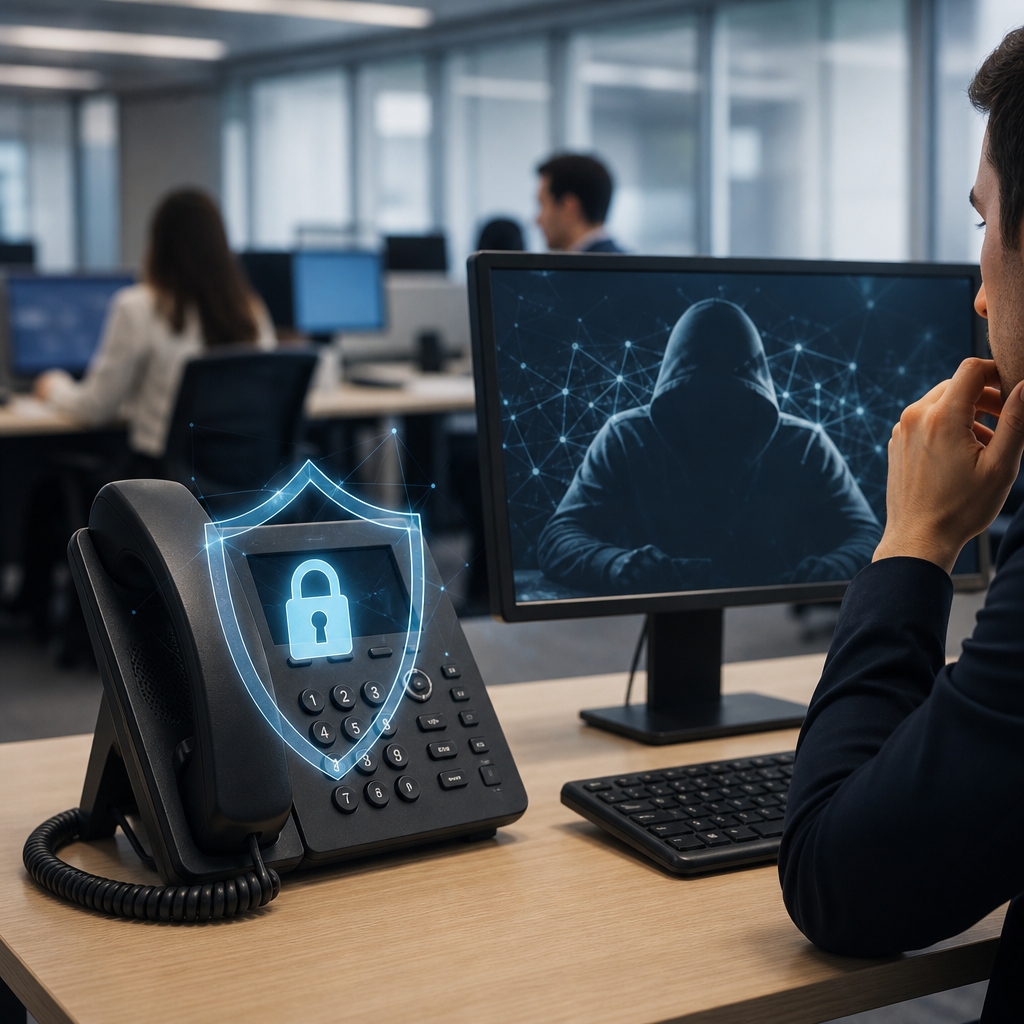
Modern voip phone systems help businesses cut costs and improve flexibility.
They also expand the attack surface for voice, data, and identity threats.
That is why cybersecurity awareness training is no longer optional for teams using cloud calling tools.
When employees understand risks, they make smarter choices during calls, logins, transfers, and remote work sessions.
Strong user habits support technical controls and reduce costly mistakes.
Learn more about broad sector needs on this industries overview page and review current guidance from CISA.
The Growing Risk Around VoIP Phone Systems
Today’s voip phone systems rely on internet connectivity, apps, mobile devices, headsets, and admin portals. Each connection point can become a target if users are not prepared. Attackers often exploit people before they bypass technology.
Threats against business phone platforms have evolved quickly. Criminals now use phishing emails, fake login pages, caller ID spoofing, voicemail fraud, and social engineering to gain access. Once inside, they may reroute calls, steal data, or disrupt service.
For many businesses, voice attacks create both financial damage and reputational harm. A missed client call or exposed recording can affect trust immediately. This risk is especially serious in regulated sectors like medical organizations and legal practices, where sensitive conversations happen daily.
Key risks include:
- Stolen credentials for softphone apps or admin dashboards
- Phishing messages that mimic telecom providers
- Vishing calls that pressure staff into sharing account details
- Toll fraud through compromised extensions
- Eavesdropping on unsecured networks or devices
- Ransomware incidents that disable communications
Businesses can also review official voice security advice from the FCC consumer guides to understand common fraud tactics.
Why Human Error Remains the Biggest Weakness
Technology alone cannot stop every threat facing voip phone systems. Firewalls and encryption matter greatly, yet employees still make decisions that affect security every day. One rushed click or one trusted voice can open the door to an attacker.
This is where cybersecurity awareness training delivers real value. Training helps staff recognize suspicious behavior before damage happens. It teaches them how attackers manipulate urgency, authority, fear, or convenience during calls and messages.
Human error often appears in simple moments:
- Reusing passwords across communication tools
- Approving unknown multi-factor prompts
- Sharing extension details with unverified callers
- Clicking voicemail notification links without checking sender details
- Using public Wi-Fi for business calling without protection
- Ignoring software update reminders on mobile devices
Training should also cover role-based scenarios because front desk workers face different risks than finance teams or executives do. For example, financial accounting firms may face payment diversion scams tied to fraudulent voice requests.
For deeper employee education best practices, see the National Institute of Standards and Technology resources.
How Cybersecurity Awareness Training Protects Voice Communications
Effective cybersecurity awareness training turns employees into an active defense layer for businesses using modern calling platforms. Instead of reacting after a breach occurs, trained teams spot warning signs early.
Good training explains both technical basics and practical behaviors. Employees should know what secure usage looks like across desk phones, mobile apps, browser clients, voicemail systems, conferencing tools,
and contact center platforms.
A strong program teaches users to:
- Verify caller identity before sharing internal information
- Report unusual call routing changes immediately
- Use strong unique passwords with password managers
- Enable multi-factor authentication on all communication accounts
- Avoid installing unapproved softphone applications
- Update phones and collaboration apps promptly
- Confirm wire requests through separate channels
When these habits become routine,
voip phone systems become harder targets.
That lowers downtime,
fraud exposure,
and incident response costs.
Teams also feel more confident handling customer interactions securely.
The CISA cyber hygiene services page offers useful guidance on strengthening everyday defenses.
Common Attack Scenarios Employees Should Learn First
Training works best when it feels realistic.
Abstract warnings are easy to forget.
Real-world examples help employees connect policy with action.
Phishing Through Voicemail Notifications
Attackers often send fake voicemail alerts by email.
These messages push users toward malicious login pages.
Once credentials are stolen,
criminals can access call records,
contacts,
or admin settings.
Employees should learn to:
- Check sender domains carefully
- Avoid clicking urgent links blindly
- Navigate directly to trusted portals instead
See additional workplace security insights on the company blog resource center and compare examples from the Anti Phishing Working Group.
Vishing Calls Targeting Frontline Staff
Vishing uses live conversation instead of email deception.
An attacker may pretend to be IT support,
a vendor,
or a senior leader needing quick help.
This tactic succeeds when staff fear delaying service.
Frontline teams in sectors like retail hospitality environments are frequent targets because speed matters during customer interactions.
Training should reinforce these steps:
- Pause before acting under pressure
- Verify identity through approved contacts only
- Escalate unusual requests immediately
The FTC scam alerts page highlights many social engineering patterns worth reviewing.
Account Takeover Through Weak Password Practices
Weak passwords remain a major issue across cloud communications platforms.
If one account falls,
an attacker may pivot into broader systems quickly.
Training must stress:
- Unique passphrases for each platform
- Password manager use across departments
- Immediate reporting of suspected credential theft
Password guidance from the NCSC password advice page supports these practices well.
What an Effective Training Program Should Include
Not all programs produce lasting results.
One annual slideshow rarely changes behavior.
Successful efforts are ongoing,
practical,
and measurable.
A complete program for businesses using voip phone systems should include short lessons throughout the year.
Microlearning improves retention better than long sessions alone.
It also keeps pace with new attack methods as they emerge.
Core elements include:
- Onboarding instruction for all new hires using communication tools
- Quarterly refreshers focused on current threats
- Simulated phishing and vishing exercises
- Role-specific content for admins,
executives,
finance staff,
and reception teams - Policies for device use,
remote access,
and incident reporting - Clear escalation paths when something seems wrong
Industries with distributed teams such as construction trades companies benefit from mobile-friendly modules because field workers rely heavily on remote communications tools.
Leaders should also track outcomes over time rather than just attendance rates.
Useful metrics include:
Phishing simulation failure rates
Reported suspicious call volume
MFA adoption levels
Incident response speed
Unauthorized app installation trends
For planning frameworks,
the
[SANS Security Awareness model]
(https:
//www.sans.org/security-awareness-training/)
offers helpful structure.
The Business Benefits Go Beyond Security Alone
Many decision makers view
cybersecurity awareness training
as purely defensive.
In reality,
it supports operations,
compliance,
customer trust,
and resilience too.
Well-trained employees reduce avoidable disruptions across
voip phone systems
.
That means fewer missed sales opportunities,
fewer support delays,
and stronger continuity during incidents.
If an outage does occur,
teams who know reporting procedures respond faster.
Benefits often include:
Lower fraud losses linked to impersonation scams
Better compliance posture in regulated industries
Improved confidence among customers and partners
Reduced burden on internal IT teams
Faster recovery when issues arise
Organizations facing urgent communication problems may also need fast expert help through
[Emergency IT Support]
(https:
//uniteditservice.com/emergency-it-support/)
while improving long-term readiness with user education.
There is another advantage worth noting.
Security-aware cultures strengthen every digital system,
not just telephony.
The same habits that protect voice accounts often protect email,
file sharing,
CRM access,
and remote collaboration suites too.
Additional resilience resources appear at
[Ready.gov cybersecurity guidance]
( https:
//www.ready.gov/cybersecurity ).
Best Practices for Building a Security-Aware Voice Culture
Culture matters more than one-time reminders.
Employees must feel responsible,
supported,
and comfortable asking questions.
To build lasting habits around
voip phone systems
,
leaders should combine policy,
practice,
technology,
and accountability.
Best practices include:
Use plain language policies everyone can understand
Reward fast reporting instead of blaming mistakes discovered early
Run tabletop exercises involving telecom disruption scenarios
Review permissions regularly within calling platforms
Limit admin rights based on job needs only
Managers play a critical role here.
When leaders follow secure processes themselves,
employees notice.
This approach works especially well in operational sectors like
[manufacturing businesses]
( https:
//uniteditservice.com/industries/manufacturing/)
where uptime affects production schedules directly.
Regular reviews keep programs relevant as vendors add features such as AI summaries,
SMS integrations,
or unified messaging options.
Stay updated through trusted sources like the
[Cybersecurity and Infrastructure Security Agency]
( https:
//www.cisa.gov/news-events/news ).
Final Thoughts
Modern
voip phone systems
deliver clear advantages,
but they also create new human-centered risks for
businesses
.
Strong
cybersecurity awareness training
helps employees detect threats early,
protect sensitive conversations,
and keep communications running smoothly.
The smartest strategy blends user education with technical safeguards.
When people know what to watch for,
your organization becomes far harder to exploit.
Leave a Reply
You must be logged in to post a comment.